
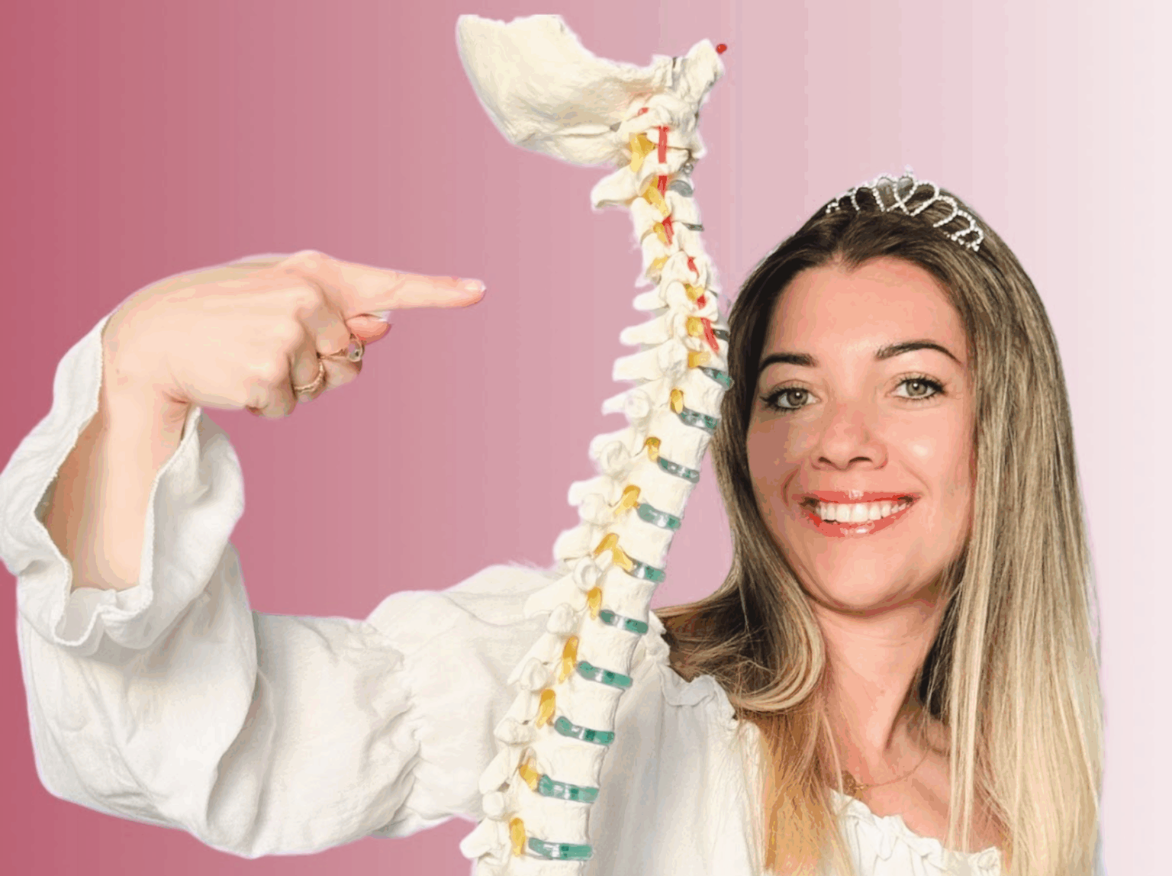
By Aneta Jagiełło | Certified McKenzie Therapist | Physiotherapist Gdynia, Poland
If You Are Searching for a Physiotherapist in Gdynia — Read This First
Every day, thousands of people across Gdynia and the wider Trójmiasto area type the same searches into Google. Back pain Gdynia. Sciatica treatment Gdynia. Physiotherapist Gdynia. Disc herniation specialist. Neck pain physiotherapy. McKenzie Gdynia.
They are searching because they are in pain. Because the pain has been there for weeks, months, or in many cases years. Because previous treatment — however well-intentioned — has not delivered the lasting results they were hoping for. And because they are looking, with varying degrees of hope and scepticism, for something better.
This article is written for those people. It is going to explain, clearly and honestly, what separates a standard physiotherapy approach from a specialist one — why the difference matters for conditions like back pain, sciatica, disc herniation, and neck pain — and why, if you are searching for a physiotherapist in Gdynia for a spinal or joint condition, the credential of your chosen practitioner may be the single most important factor in whether your treatment actually works.
It is also going to tell you exactly where in Gdynia you can access the highest level of specialist physiotherapy currently available in the region.
The Physiotherapy Landscape in Gdynia — What Patients Need to Know
Gdynia is a city of approximately 250,000 people — the third largest city in the Trójmiasto metropolitan area after Gdańsk and Sopot, and one of northern Poland’s most significant economic and cultural centres. It is home to a substantial physiotherapy sector, with clinics and practitioners ranging from large multidisciplinary rehabilitation centres to individual specialist practices.
For a patient in Gdynia searching for physiotherapy for back pain, sciatica, disc herniation, or neck pain, the range of available options can appear broad. In reality, the clinical quality and specialist depth of those options varies enormously — and understanding that variation is essential to making a choice that leads to lasting results rather than another cycle of temporary relief.
The fundamental distinction that matters most — the one that most patients never know to make — is the distinction between general physiotherapy and specialist spinal physiotherapy. Between a practitioner with a solid general qualification and one with advanced, internationally recognised postgraduate credentials in mechanical diagnosis and spinal treatment.
In Gdynia, that distinction currently centres on one credential above all others: McKenzie Institute International Certification.
What Is the McKenzie Method — And Why Is It Different From Standard Physiotherapy in Gdynia?
When most people in Gdynia think about physiotherapy, they think about a fairly predictable sequence of events. An appointment. A brief history. Some hands-on treatment — massage, joint mobilisation, perhaps ultrasound or electrotherapy. A set of exercises to take home. A follow-up appointment. Repeat.
This is standard physiotherapy. It is broadly appropriate for a wide range of musculoskeletal conditions. And for many patients — particularly those with straightforward, acute conditions that have not become chronic — it produces adequate results.
But for the conditions that bring the majority of physiotherapy patients in Gdynia through the door — chronic back pain, recurring sciatica, disc herniation, persistent neck pain, shoulder dysfunction, hip and knee problems that have not responded to previous treatment — standard physiotherapy frequently falls short. Not because the practitioners are incompetent. But because the approach lacks the diagnostic precision that these conditions require.
This is precisely the gap that the McKenzie Method of Mechanical Diagnosis and Therapy — MDT — was designed to fill.
Developed by New Zealand physiotherapist Robin McKenzie from clinical observations made in the 1950s and refined through decades of subsequent research, the McKenzie Method is built on a single powerful insight: that most spinal and joint pain has a specific mechanical cause, and that cause can be identified through systematic, movement-based assessment — and addressed through targeted, personalised treatment that the patient learns to apply themselves.
The implications of this insight are profound. Rather than applying a protocol appropriate for a diagnostic category — the standard physiotherapy approach — a certified McKenzie therapist conducts a precise individual assessment that identifies the specific directional movement pattern driving each patient’s pain. Treatment is then built around that individual pattern — not around the diagnosis label, not around what works for most patients with similar conditions, but around what this specific patient’s body, at this specific stage of their condition, actually needs.
The result is faster diagnosis, more precise treatment, longer-lasting outcomes, and — critically — a patient who learns to manage their own condition independently rather than returning to the clinic indefinitely.
The McKenzie Certification — What It Takes and Why So Few Physiotherapists in Gdynia Hold It
Understanding why McKenzie certification matters requires understanding what earning it actually involves — because the gap between a McKenzie-certified therapist and a standard physiotherapist is not a matter of attitude or experience. It is a matter of clinical training that most physiotherapists have simply never undertaken.
The full McKenzie Institute International credentialing pathway consists of four sequential courses — Part A through Part D — each building progressively on the diagnostic and therapeutic skills developed in the previous one. The courses span the full range of spinal and extremity assessment — lumbar spine, cervical spine, thoracic spine, and peripheral joints — developing the clinical reasoning skills required to conduct a precise McKenzie mechanical assessment for each region.
Completing the four courses qualifies a practitioner to sit the McKenzie Institute International Credentialing Examination — a rigorous clinical assessment that evaluates not merely knowledge of the method but the ability to apply it with genuine precision in real clinical encounters. It is an examination that tests clinical reasoning, diagnostic accuracy, and therapeutic judgement at a level that a significant proportion of candidates do not achieve on their first attempt.
Those who complete the full pathway and pass the examination earn the designation of Certified McKenzie Therapist — a credential recognised internationally as the gold standard of specialist spinal physiotherapy assessment.
Globally, this credential is held by fewer than a small fraction of qualified physiotherapists. In Poland, the number of practitioners who have completed the full pathway is extraordinarily small. In Gdynia specifically, Aneta Jagiełło is among the very few — if not the only — practitioner currently offering fully certified McKenzie assessment and treatment.
She earned her certification in 2012. She has been applying it across four countries and thousands of clinical cases for the fourteen years since.
Back Pain in Gdynia — The Most Common Condition, The Most Commonly Undertreated
Back pain is the most common reason patients seek physiotherapy in Gdynia — as it is across Poland, across Europe, and across the world. It is estimated to affect up to 80 percent of Poles at some point in their lives. It is the leading cause of sick leave and long-term disability in Poland. And it is the condition for which the evidence base supporting McKenzie-based physiotherapy is strongest and most extensive.
The pattern that most patients with back pain in Gdynia experience is depressingly predictable. Pain develops — often gradually, sometimes suddenly. They seek treatment. They receive a course of physiotherapy — manual therapy, general exercises, postural advice. The pain reduces. They return to normal activity. And then, weeks or months later, the pain returns. The same place. The same character. Sometimes more severe.
This cycle — acute episode, treatment, temporary relief, recurrence — is not inevitable. It is the consequence of a treatment approach that addresses the experience of pain without identifying and correcting the specific mechanical pattern driving it.
The McKenzie assessment for back pain identifies that mechanical pattern with a precision that standard physiotherapy cannot replicate. Whether the condition is acute lower back pain, chronic lumbar dysfunction, lumbar disc herniation, lumbar radiculopathy, degenerative disc disease, or recurring episodes of mechanical back pain — the McKenzie assessment identifies the directional preference specific to that patient’s presentation and builds a treatment programme around it.
For patients in Gdynia who have been through the cycle of temporary relief and recurrence — sometimes repeatedly, over years — the McKenzie assessment frequently represents the first time anyone has conducted a thorough enough evaluation to identify what is actually driving their pain. And for many of those patients, that identification — and the personalised treatment programme that follows — produces results that no previous treatment has achieved.
Sciatica in Gdynia — Why Most Treatment Provides Only Temporary Relief
Sciatica is one of the most painful and most debilitating conditions presenting in physiotherapy clinics across Gdynia. The burning, shooting, electric pain that radiates from the lower back through the buttock and down the leg — sometimes as far as the foot — can make sitting, standing, walking, and sleeping all equally difficult. In its more severe forms, it is capable of rendering normal daily activity essentially impossible.
It is also one of the conditions most frequently undertreated by standard physiotherapy approaches in Poland.
The reason is the same as for back pain — but with an additional dimension. Sciatica involves a neurological component — nerve root irritation or compression — that standard physiotherapy assessment rarely addresses with sufficient precision. The specific mechanical loading pattern that is maintaining the nerve root irritation is individual to each patient. What relieves it in one presentation may aggravate it in another. Applying a standard protocol — however well-intentioned — to a condition that requires individual mechanical assessment is structurally unlikely to produce lasting results.
The McKenzie approach to sciatica centres on a clinical phenomenon called centralisation — the movement of peripheral pain, pain in the leg or foot, back towards the spine in response to specific directional loading. Centralisation is one of the most clinically significant and most consistently validated phenomena in spinal medicine. The research literature — including landmark studies in the Spine journal, the British Medical Journal, and the Journal of Orthopaedic and Sports Physical Therapy — consistently shows that patients who achieve centralisation during McKenzie assessment have dramatically better outcomes than those who do not, regardless of symptom duration or severity.
For a patient in Gdynia who has been dealing with sciatica for months — who has attended multiple physiotherapy sessions, taken anti-inflammatory medications, and been told that their disc herniation is a permanent problem they will need to manage — watching their leg pain centralise in real time during a McKenzie assessment is frequently one of the most clinically significant moments of their entire treatment journey. It is direct, observable evidence that their condition is not fixed, not permanent, and not something they simply have to endure.
At Aneta Jagiełło’s clinic in Gdynia, the McKenzie assessment for sciatica is the starting point of every treatment — not an afterthought, not a supplementary tool, but the primary clinical methodology through which the cause of the nerve root irritation is identified and addressed.
Disc Herniation in Gdynia — What Patients Are Not Being Told
Disc herniation is perhaps the most feared diagnosis in spinal medicine. When a patient in Gdynia receives an MRI report showing a disc herniation — “przepuklina dysku” — the response is frequently alarm, a sense of irreversibility, and an assumption that surgery is either necessary or inevitable.
In the vast majority of cases, neither assumption is accurate.
The clinical evidence on disc herniation is considerably more encouraging than most patients in Gdynia are led to believe. Natural resorption of herniated disc material — the process by which the body’s immune response gradually absorbs and eliminates the herniated portion of the disc without intervention — has been documented extensively in the research literature. A 2015 meta-analysis in the American Journal of Neuroradiology found that spontaneous resorption occurred in a significant proportion of cases, with the largest herniations showing the highest resorption rates.
The landmark SPORT trial — a major randomised controlled study comparing surgical and non-surgical treatment for disc herniation with sciatica, published in the Annals of Internal Medicine — found equivalent outcomes in surgical and non-surgical groups at two-year, four-year, and eight-year follow-up. For the majority of patients with disc herniation and associated sciatica, non-surgical treatment produces long-term results that are clinically equivalent to surgery — without the risks of operative intervention.
What this means for a patient in Gdynia with a disc herniation diagnosis who has been told that surgery may be necessary is clear — in most cases, there is a significant clinical window during which precise conservative treatment, including McKenzie-based physiotherapy, should be pursued and exhausted before surgical intervention is considered.
Aneta Jagiełło has treated complex disc herniation cases — including patients with long-standing, severe symptoms who had been referred for surgical consultation — using McKenzie-based assessment and targeted movement therapy. The majority of those patients did not proceed to surgery. They recovered through a conservative pathway that standard physiotherapy had been unable to provide — because standard physiotherapy had never properly identified the mechanical pattern driving their condition in the first place.
Neck Pain in Gdynia — The Growing Crisis Nobody Is Treating Precisely Enough
Neck pain is the second most common musculoskeletal complaint among physiotherapy patients in Gdynia — and its incidence is rising rapidly as screen time, sedentary work, and chronic stress become increasingly embedded in Polish daily life.
The pattern is familiar. Long hours at a desk or screen. A gradual development of tension in the neck and upper shoulders. Headaches — frequently dismissed as tension headaches without investigation of their cervical origin. Sometimes pain, numbness, or tingling radiating into the arms and fingers. And in many cases, a treatment history of massage and general neck exercises that reduces the tension temporarily and allows it to return unchanged.
Neck pain, like back pain and sciatica, has specific mechanical causes that require precise assessment to identify. Cervical disc herniation, cervical radiculopathy, mechanical neck pain, cervicogenic headaches, “text neck” syndrome — each of these has a specific directional pattern that McKenzie cervical spine assessment is designed to identify and address.
The McKenzie assessment for the cervical spine follows the same systematic approach as the lumbar assessment — detailed clinical history, movement analysis, directional loading, observation of centralisation or peripheralisation — but applied to the specific biomechanical characteristics of the cervical region. The result is the same: a precise, individual directional preference that forms the basis of a personalised treatment programme.
For patients in Gdynia whose neck pain has been accompanied by headaches — particularly headaches that are worse in the morning, that develop during sustained postures, or that are relieved by specific neck positions — the McKenzie cervical assessment frequently reveals a mechanical pattern that explains the headaches and provides a direct, non-pharmacological treatment pathway for both the neck pain and the headache simultaneously.
What Aneta Jagiełło Offers That Standard Physiotherapy in Gdynia Does Not
The distinction between what Aneta Jagiełło offers and what standard physiotherapy in Gdynia provides is not a matter of care, dedication, or clinical effort. It is a matter of diagnostic methodology — of the tools available to identify what is actually driving a patient’s pain before treatment begins.
She brings to every patient encounter a clinical toolkit that no standard physiotherapy training provides:
Full McKenzie Institute International Certification — the highest level of specialist spinal assessment qualification available in physiotherapy, held by a tiny fraction of practitioners worldwide and by very few in Poland.
Seventeen years of international clinical experience across Poland, Germany, Spain, and the Canary Islands — treating back pain, sciatica, disc herniation, neck pain, and joint dysfunction across multiple healthcare systems, cultures, and patient populations.
A Master of Science in Physiotherapy from the Medical University of Łódź, Faculty of Military Medicine — one of Poland’s most rigorous academic physiotherapy programmes.
A Diploma in Functional Manual Therapy — advanced hands-on clinical skills that complement and enhance the McKenzie assessment and treatment approach.
Certification as a Buteyko Breathing Method Instructor — addressing the dysfunctional breathing patterns that contribute significantly to chronic musculoskeletal pain, neck tension, and nervous system dysregulation.
Certification as a Consultant in Psychobiology — trained to identify and address the emotional and neurological patterns that chronic pain generates and sustains, and that standard physiotherapy cannot reach.
Specialist certifications in women’s health physiotherapy — including Osteopathic Approach to Urogynaecological Therapy and Osteopathic Approach to Pregnancy and Postnatal Care — making her one of the very few practitioners in Gdynia with genuine specialist depth in this area.
Specialist certification in Psychomotor Developmental Disorders in Children — extending her clinical expertise to paediatric patients experiencing movement difficulties, postural problems, developmental delays, and breathing dysfunction.
The Conditions Treated — A Complete Reference for Gdynia Patients
For patients in Gdynia searching for specialist physiotherapy, the following conditions are treated at Aneta Jagiełło’s practice — in person in Gdynia and online worldwide:
Spine and back conditions: Lower back pain — acute and chronic. Sciatica and lumbar radiculopathy. Disc herniation and disc prolapse. Disc bulge and degenerative disc disease. Spondylolisthesis. Spinal stenosis. Recurring episodes of mechanical back pain. Post-surgical spinal rehabilitation. Thoracic spine pain and stiffness.
Neck and upper body conditions: Cervical disc herniation. Cervical radiculopathy and arm pain. Cervicogenic headaches. Tension headaches. “Text neck” syndrome. Neck and upper back tension. Numbness and tingling in arms and fingers. Dizziness of cervical origin.
Joint conditions: Shoulder pain and frozen shoulder. Tennis elbow and golfer’s elbow. Hip pain and stiffness. Knee pain — including overload and post-injury. Ankle instability. Carpal tunnel syndrome. Heel spur. Muscle and tendon problems.
Women’s health: Pregnancy-related back and pelvic pain. Preparation for childbirth. Postpartum recovery. Pelvic floor dysfunction. Caesarean section scar therapy. Diastasis recti. Urogynaecological conditions.
Children’s physiotherapy: Postural problems including scoliosis. School-related spinal strain. Foot problems and orthotic insoles. Psychomotor developmental disorders. Breathing dysfunction. Anxiety-related physical tension.
Breathing and nervous system: Buteyko breathing therapy. Dysfunctional breathing patterns. Chronic stress and tension. Anxiety-related physical symptoms. Chronic fatigue and poor sleep.
Psychobiology and mind-body: Chronic pain without clear structural cause. Recurring conditions with emotional component. Stress and trauma stored in the body. Psychosomatic pain patterns.
Online Physiotherapy in Gdynia — Accessing Specialist Care Without Boundaries
One of the most significant developments in specialist physiotherapy access over recent years — and one that is particularly relevant for patients across Poland who cannot travel to Gdynia in person — is the genuine effectiveness of online McKenzie consultations.
The McKenzie Method is uniquely suited to online delivery among physiotherapy approaches because the assessment is based on observed movement and patient-reported symptom response rather than hands-on palpation. A certified McKenzie therapist can conduct a full mechanical assessment — observing movement quality and range, recording pain response to directional loading in real time, and identifying the patient’s directional preference — through a video consultation with the same precision as an in-person appointment.
Aneta Jagiełło offers online consultations in Polish, English, and Spanish — making specialist McKenzie physiotherapy accessible to patients anywhere in Poland, to Polish diaspora communities worldwide, and to international patients seeking English or Spanish-language specialist consultation.
For patients in Gdynia who prefer online appointments — or who need follow-up sessions between in-person visits — online consultation provides full clinical continuity without travel or waiting.
No referral is required. No waiting list. Direct booking through the website.
How to Book — Physiotherapy in Gdynia and Online
In-person appointments — Gdynia clinic:
First appointment: 90 minutes — reflecting the time required for thorough McKenzie mechanical assessment before treatment begins. This alone distinguishes the clinical approach from the standard 30 to 45 minute physiotherapy session that most patients have previously experienced.
Follow-up appointments: 60 minutes — continuing the treatment plan established in the initial assessment, monitoring progress, and refining the self-management programme.
Online appointments:
Available in 30, 60, and 90 minute formats depending on complexity and stage of treatment. Full McKenzie assessment and personalised treatment prescription available at all durations.
Languages: Polish | English | Spanish
Locations: Gdynia, Trójmiasto | Łódź | Spain | Online worldwide
Website: anetajagiello.com
No referral required. No waiting list. Book directly.
The Question That Changes Everything
If you are in Gdynia and you have been dealing with back pain, sciatica, disc herniation, neck pain, or a joint condition — and if the treatment you have received so far has provided only temporary relief — there is one question worth asking with complete honesty.
Has the physiotherapist you have seen conducted a precise mechanical assessment of the specific pattern driving your pain? Has anyone identified your directional preference — the specific movement that reduces or eliminates your symptoms? Has your treatment been built around that individual finding, or around a protocol applied to your diagnostic category?
If the answer to any of those questions is no — and for the vast majority of patients who have received standard physiotherapy for spinal conditions in Gdynia, the answer is no — then the most important intervention you have not yet tried is a McKenzie mechanical assessment conducted by a certified therapist.
Not because it is guaranteed to resolve every case. But because it is the only approach that identifies the specific mechanical cause of your individual pain — and gives your body a precise, personalised, evidence-based pathway out of it.
In Gdynia, that pathway is available. It begins with a single appointment. And for most patients who take it, it is the appointment that finally changes everything.
About the Author
Aneta Jagiełło is a Certified McKenzie Method Therapist and Master of Science in Physiotherapy with over 17 years of international clinical experience across Poland, Germany, Spain, and the Canary Islands. She holds specialist certifications in Functional Manual Therapy, Buteyko Breathing Method, Psychobiology, Women’s Health Physiotherapy, and Psychomotor Developmental Therapy for Children. She sees patients in person at her clinic in Gdynia and offers online consultations worldwide in Polish, English, and Spanish.
In-person appointments in Gdynia — online consultations worldwide. No waiting list. No referral required. https://anetajagiello.com/uslugi/